Subscription Billing 2026: Stripe vs PayPal vs Paddle for Churn

Choosing the right subscription billing platform is one of the most consequential decisions a SaaS founder makes. Get it wrong and you are not just dealing with integration headaches. You are bleeding revenue through failed payments, clunky retry logic, and churn that could have been prevented.
In 2026, three platforms dominate the subscription billing landscape: Stripe, PayPal (via Braintree), and Paddle. Each handles recurring payments differently. Each has a distinct approach to failed payment recovery. And each creates a very different churn profile for your business.
This is not a feature comparison matrix. This is a founder-to-founder breakdown of how these platforms actually perform when it comes to the thing that matters most: keeping your customers paying.
How Subscription Billing Platforms Impact Churn
Before diving into the comparison, it is worth understanding why your billing platform choice directly affects your churn numbers.
Involuntary churn, where customers leave because a payment fails rather than because they chose to cancel, accounts for 20-40% of total churn in most SaaS businesses. The platform you use determines three critical factors:
- Payment success rates on initial and recurring charges
- Built-in retry and recovery mechanisms when payments fail
- Customer payment method management that prevents failures in the first place
A platform with a 2% higher payment success rate on renewals might not sound like much. But on 10,000 subscribers at $50/month, that is $120,000 in annual recovered revenue. The compounding effect over years is staggering.
If you are not sure where your business stands, a free churn audit can surface exactly how much involuntary churn your current setup is creating.
Stripe: The Developer's Choice
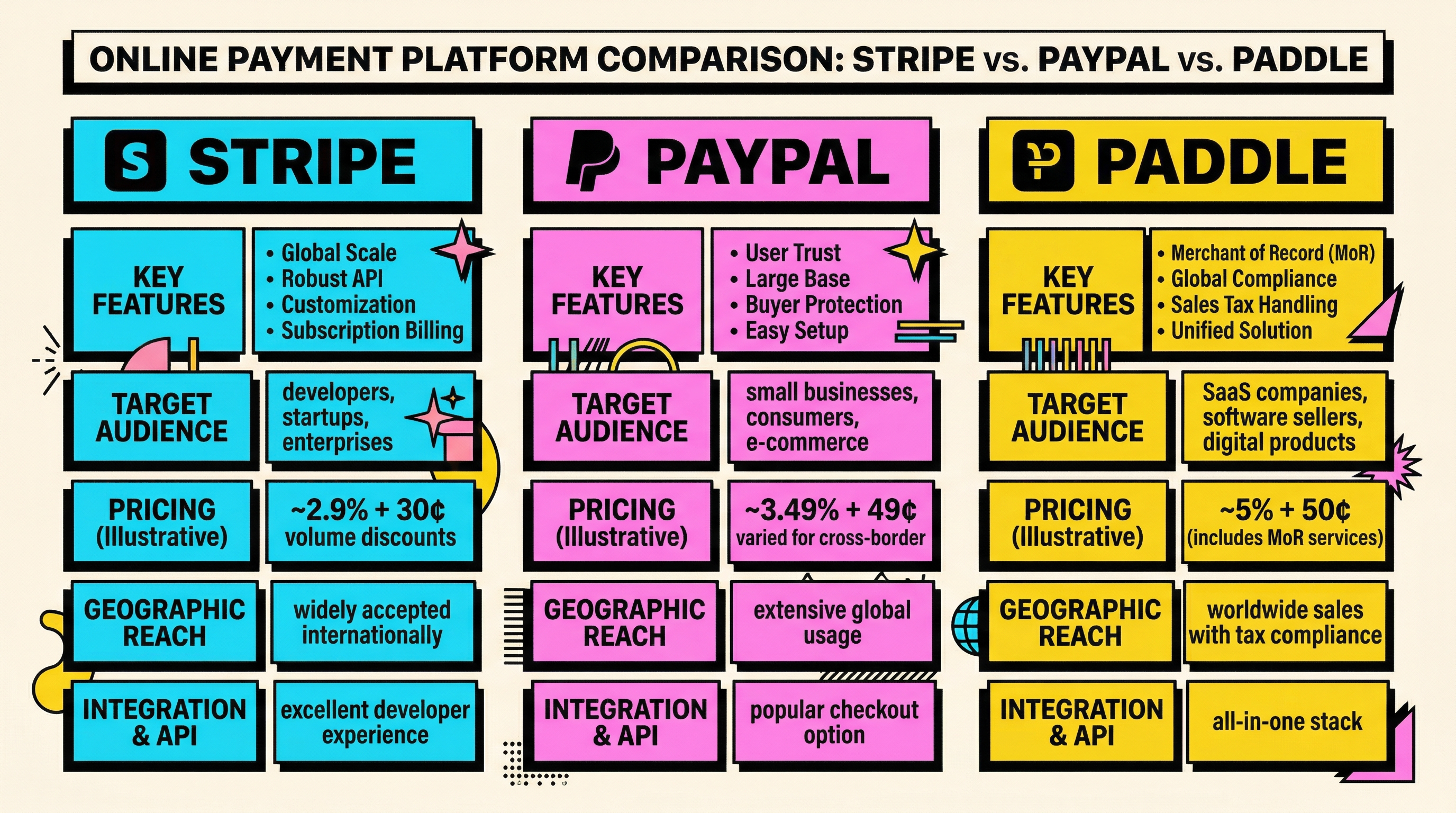
Stripe is the default for most SaaS companies, and for good reason. Its API is exceptional, documentation is industry-leading, and the ecosystem of tools built on top of it is enormous.
Payment Success Rates
Stripe processes payments through its own acquiring infrastructure (Stripe Treasury) in major markets, which gives it direct relationships with card networks. This matters for retry success. When Stripe retries a failed payment, it can route through different acquiring paths, test different times, and leverage network-level data to optimize timing.
Stripe's Smart Retries, their ML-driven retry system, claims to recover up to 41% of failed subscription payments automatically. In practice, the numbers vary. SaaS businesses in the $10-100/month price range typically see 25-35% recovery through Smart Retries alone.
The key advantage: Stripe's network effects. With millions of businesses processing through Stripe, their retry algorithms have enormous training data. They know, for instance, that retrying a "do_not_honor" decline on a Tuesday morning has a higher success rate than Thursday evening for certain issuing banks.
Dunning and Recovery Tools
Stripe's built-in dunning is functional but basic. You get:
- Configurable retry schedules (up to 4 retries over a customizable window)
- Automatic emails to customers when payments fail
- A hosted payment method update page
The emails are templated and somewhat generic. Most serious SaaS operators build custom dunning flows on top of Stripe's webhooks rather than relying on the built-in emails.
Where Stripe excels is the webhook infrastructure. Events like invoice.payment_failed, customer.subscription.updated, and payment_intent.payment_failed give you granular control over your recovery workflow. You can build sophisticated multi-channel dunning sequences using these events.
Churn-Relevant Weaknesses
Stripe's biggest weakness for churn prevention is that it is fundamentally a payment infrastructure provider, not a subscription management platform. Stripe Billing adds subscription features, but the retry logic and dunning capabilities require significant configuration and often custom development to match dedicated solutions.
Card updater services (where Stripe automatically updates expired card details) work well in the US and UK but coverage drops significantly in other markets. If you serve a global customer base, expect card expiry to remain a meaningful churn driver. Understanding your decline code patterns becomes essential for optimizing recovery.
PayPal (Braintree): The Global Reach Play
Braintree, PayPal's developer-facing platform, takes a different approach. While it supports standard card processing, its real differentiator for churn is the PayPal wallet integration.
Payment Success Rates
Braintree's card processing success rates are broadly competitive with Stripe in major markets. Where it gets interesting is when customers pay via PayPal balance or linked bank accounts instead of cards.
PayPal wallet payments have fundamentally different failure modes than card payments. There are no card expiry issues. No CVC mismatches. No issuer declines based on fraud scoring. The primary failure mode is insufficient funds, which is a simpler problem to retry around.
For SaaS businesses where PayPal is offered as a payment method, the portion of revenue coming through PayPal wallets typically shows 15-25% lower involuntary churn rates compared to card-only cohorts. That is significant.
The caveat: PayPal adoption varies wildly by market and audience. Enterprise B2B SaaS will see minimal PayPal usage. Consumer and SMB products, particularly in Europe and markets where PayPal has strong penetration, can see 20-40% of subscribers choosing PayPal.
Dunning and Recovery Tools
Braintree's retry engine uses what they call "Optimal Retry Scheduling," which is their equivalent of Stripe's Smart Retries. It analyzes historical data to choose retry timing and has been iterating on this since the 2019 PayPal acquisition brought more data into the system.
The dunning email system is less flexible than Stripe's webhook-driven approach. You get pre-built email templates with limited customization. For most businesses, this means building custom recovery flows anyway.
One unique advantage: if a customer's card fails but they have a PayPal account, Braintree can prompt a fallback to PayPal payment. This cross-method recovery path does not exist in Stripe or Paddle, and it can recover 5-8% of otherwise lost transactions.
Churn-Relevant Weaknesses
Braintree's developer experience is noticeably behind Stripe. The documentation is adequate but not exceptional. Integration takes longer, edge cases are less well-documented, and the ecosystem of third-party tools is smaller.
The PayPal brand can also create friction. Some customers perceive PayPal as less professional for B2B transactions. And PayPal's own account holds and disputes process can create unexpected churn when PayPal freezes a customer's account, affecting their linked subscriptions.
Reporting and analytics are weaker than Stripe's. Getting clear visibility into your payment recovery benchmarks requires more custom work.
Paddle: The Merchant of Record Model
Paddle takes a fundamentally different approach. Instead of being a payment processor, Paddle acts as the Merchant of Record (MoR). They sell your software on your behalf, handle tax compliance, and manage the billing relationship.
Payment Success Rates
Paddle's MoR model creates some unique advantages for payment success. Because Paddle is the seller, they can optimize payment routing across their entire customer base rather than per-merchant. They process through multiple acquiring banks and can route transactions through whichever path has the highest success rate for a given card issuer and region.
Paddle reports average payment success rates of 95-97% on renewals, which is competitive with Stripe's best numbers. The real advantage shows up in international transactions. Because Paddle has local acquiring relationships in more markets, cross-border decline rates are lower.
For SaaS businesses selling globally, this matters. Cross-border card transactions have 2-3x higher decline rates than domestic ones. A platform that can process a UK customer's payment through a UK acquirer rather than routing it through a US acquirer will see meaningfully better success rates.
Dunning and Recovery Tools
Paddle's dunning is built into the platform and requires zero configuration. When a payment fails, Paddle handles:
- Automated retry scheduling optimized by their ML models
- Customer notification emails (branded to your product)
- A hosted payment update page
- Automatic subscription pause and reactivation on recovery
The "it just works" approach is genuinely appealing for small teams. You do not need to build webhook handlers, configure retry schedules, or set up email templates. Paddle handles recovery as part of the MoR service.
Recovery rates are solid. Paddle claims to recover 70%+ of failed payments through their automated flow, though independent verification of this number is limited.
Churn-Relevant Weaknesses
The MoR model creates some churn risks that are unique to Paddle.
First, you do not own the customer billing relationship. If you need to do something non-standard, like extending a grace period for a high-value customer, adjusting a prorated charge, or implementing custom dunning logic for enterprise accounts, you are limited by what Paddle's platform supports.
Second, Paddle's fee structure is higher. They charge 5% + $0.50 per transaction (compared to Stripe's 2.9% + $0.30). This is offset somewhat by Paddle handling tax compliance, but it means the cost of every recovered payment is higher. When you are doing the math on the true cost of failed payments, Paddle's fees change the equation.
Third, customer confusion. Some customers see "Paddle" on their bank statement instead of your company name. This leads to accidental chargebacks and disputes, which create their own form of churn. Paddle has improved statement descriptors in recent years, but it remains an issue.
Head-to-Head: What the Numbers Say
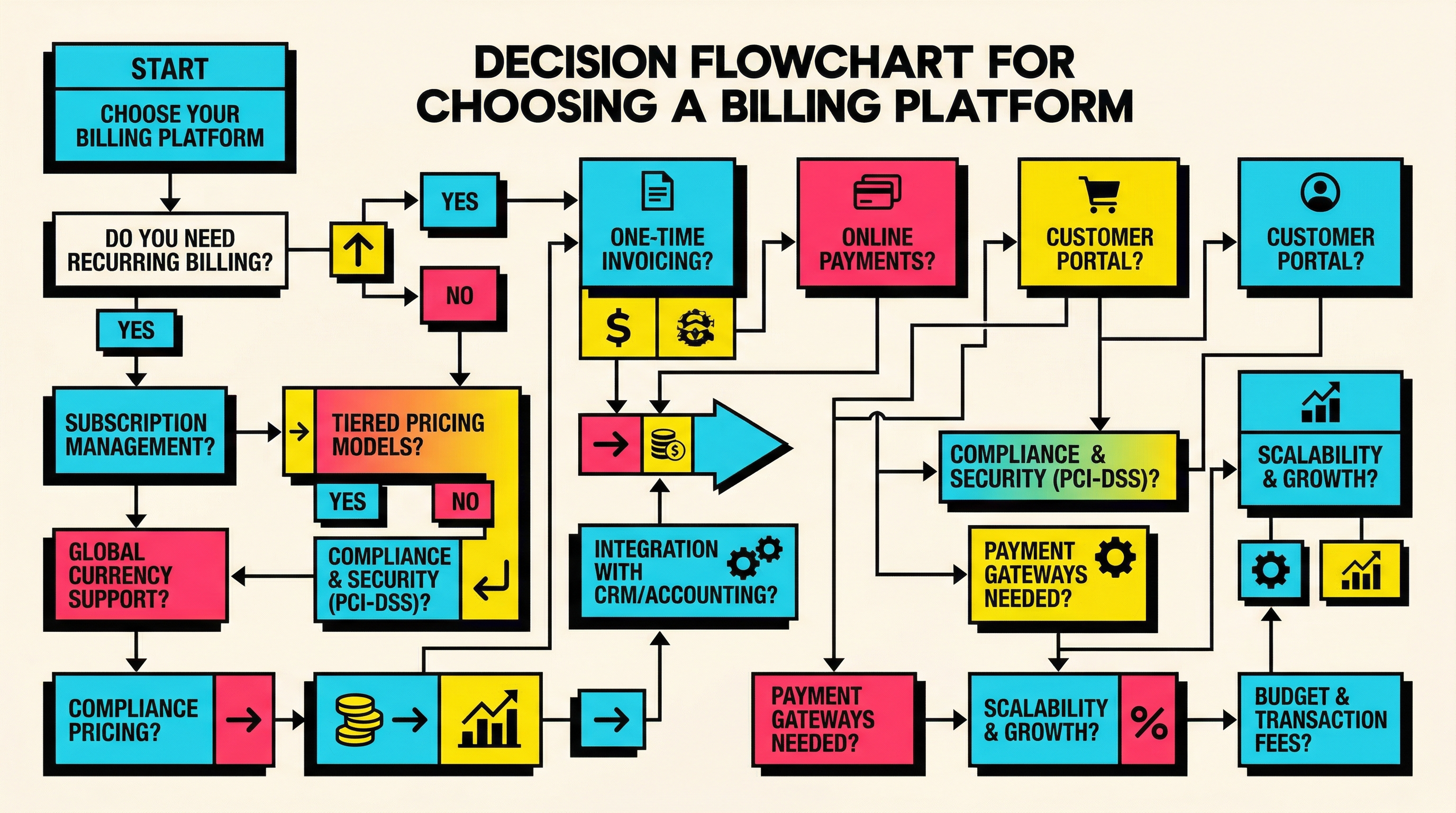
Here is how the three platforms compare on the metrics that directly impact churn:
Payment Success Rate (Recurring)
- Stripe: 94-97% domestic, 90-93% cross-border
- PayPal/Braintree: 93-96% cards, 97-99% PayPal wallet
- Paddle: 95-97% domestic, 93-96% cross-border
Built-in Recovery Rate
- Stripe Smart Retries: 25-35% of failed payments
- Braintree Optimal Retry: 20-30% of failed payments
- Paddle Auto-Recovery: 30-40% of failed payments (includes MoR advantages)
Time to Implement Dunning
- Stripe: Days to weeks (requires custom development)
- Braintree: Days to weeks (similar custom work needed)
- Paddle: Minutes (built-in, zero config)
Card Updater Coverage
- Stripe: Strong in US/UK/EU, weaker elsewhere
- Braintree: Similar to Stripe, plus PayPal fallback
- Paddle: Handled internally, coverage varies
Cost Per Recovered Dollar
- Stripe: ~3% of recovered amount
- Braintree: ~3-3.5% of recovered amount
- Paddle: ~5.5% of recovered amount
Which Platform Minimizes Churn for Your Business?
The answer depends on your specific situation. Here is the decision framework:
Choose Stripe if:
- You have engineering resources to build custom dunning
- Your customers are primarily in the US, UK, or EU
- You want maximum flexibility and control
- You are building complex billing logic (usage-based, tiered, etc.)
- You want the largest ecosystem of recovery tools and integrations
Choose PayPal/Braintree if:
- Your customers are consumer or SMB (higher PayPal wallet adoption)
- You sell in markets where PayPal is dominant (Germany, Australia)
- The cross-method fallback (card to PayPal) aligns with your audience
- You want a hedge against card-only churn risks
Choose Paddle if:
- You are a small team without dedicated billing engineering
- You sell globally and want tax compliance handled
- You prefer "it just works" over "I built exactly what I want"
- Your product is straightforward SaaS with standard subscription tiers
- You are willing to pay higher fees for lower operational burden
The Hybrid Approach
Many SaaS companies in 2026 are running hybrid setups. Stripe as the primary processor with PayPal offered as an alternative payment method. This gives you the best of both worlds: Stripe's ecosystem and flexibility for card payments, plus PayPal's wallet-based resilience against card churn.
The downside is complexity. Two billing integrations means two sets of webhooks, two reconciliation flows, and more surface area for bugs. But for businesses where involuntary churn is a material revenue problem, the 15-25% churn reduction on PayPal cohorts often justifies the engineering investment.
What Matters More Than Your Platform Choice
Here is the uncomfortable truth: your billing platform matters less than what you do with it.
A well-configured Stripe account with custom dunning sequences, proactive card expiry management, and optimized retry timing will outperform a default Paddle setup every time. Conversely, a neglected Stripe integration with default retry settings will underperform Paddle's out-of-the-box recovery.
The highest-performing SaaS companies treat payment recovery as a product feature, not a billing detail. They monitor recovery rates weekly, A/B test dunning emails, analyze decline codes by issuer, and continuously optimize their retry logic.
Regardless of which platform you choose, the fundamentals remain the same:
- Monitor your payment health metrics weekly, not monthly
- Implement proactive card expiry management before cards fail
- Build multi-channel dunning that goes beyond email (in-app banners, SMS)
- Analyze your decline codes to understand why payments fail, not just that they fail
- Benchmark your recovery rates against industry standards
Start With What You Have
If you are already on one of these platforms, switching is expensive and risky. The better move is usually to optimize your current setup before considering migration.
Run a free churn audit to see exactly where your current billing setup is leaking revenue. You might find that a few targeted improvements to your existing Stripe, Braintree, or Paddle configuration recover more revenue than a platform migration ever would.
The best subscription billing platform for churn is the one you have configured properly.
Related Posts


The SaaS Billing Compliance Checklist for 2026
Stripe Insufficient Funds Recovery: A Playbook for SaaS Teams
How healthy is your Stripe account?
Get a free churn health report. Find pending cancellations, failed payments, and expiring cards putting your MRR at risk.
Run Free Audit